
Content strategy that keeps complex products unmistakably human.

A warm, softly lit content strategist's workspace at golden hour. An open laptop on a wooden desk emits delicate threads of amber light that flow upward onto a deep blue wall, where they connect to pinned wireframes, user journey maps, a website mockup, color swatches, and sticky notes. A vase of dried pampas grass sits to the right.

I’ve spent 36 years building digital experiences, jumping right into new technology when I launched a bulletin board system (BBS) in 1990, connecting with people around the U.S. I led content strategy for the ground-up build of U.S. Bank’s Investments portal, and today I’m responsible for all secure-side digital content for the bank’s Wealth Management business.

During the 1990s and into the early 2000s, the web was built by generalists who handled every stage of production, from initial concepts to fully coded experiences. As the web expanded, corporate tech fragmented those responsibilities into narrow, specialized silos, separating product design, user experience design, content strategy, visual design, and engineering. Marketing broke up the same way, into top-, middle-, and bottom-of-funnel conversion campaigns, social media marketing, SEO, and more. Over the course of my career, I’ve been hands-on in almost all of those specialties, learning how they work and how to create an experience that resonates with customers, regardless of the medium I’m using to connect with them. Now, generative AI is collapsing those silos back into a single concept-to-code workflow, and my background in the full production cycle and my ability to adapt to constantly evolving technology have put me at the front of those changes.

How I lead

My leadership principles.

Most of what I do as a leader happens in small, daily decisions about people, priorities, and trade-offs, and these three principles are what I use to make them.

Always curious

I’m always curious and always looking to learn new things, and I’m just as curious about the people I work with. I ask every mentee, “Where do you want to go, and why does it matter to you?” People do their best work when it connects to something they want for themselves, so I start by helping them work out what that is, and then I teach, mentor, and guide them toward it.

Once you know your why, you also know what you want to avoid at all costs, and you still have to ask the hard questions, because you could be avoiding something due to subconscious prejudices that have no basis in reality. I play devil’s advocate to force us out of self-agreement and into seeing the opposite perspective, which is the best way I know to avoid circular thinking.
What shapes me

I’ve played sports all my life (volleyball, tennis, swimming, archery, and barrel racing), I follow multiple teams as a fan, and I have a deep background as a gamer, from MUDs to MMORPGs. Both drive me to compete hard in everything I do, and both add to my willingness to take calculated risks to achieve a goal. My curiosity runs through everything creative, from developing my own film in a darkroom at age 10, to earning a degree in cinematography, to running a successful business selling soaps, lotions, and candles for years, and I was self-taught in almost all of it. These things don’t fit in a resume, but they absolutely shape who I am.

Into the unknown

My goal is to take ambiguous situations and bring clarity to them for everyone. When a new technology shows up, I jump in and play. I used to say that I banged on things until they broke, then put them back together so that I could explain them to others and make them work for us, and the reality isn’t far off, because I teach myself how to use new tech (yes, sometimes by breaking things first), and then I teach others.

I enjoy taking risks and trying new things, which doesn’t mean I skip the research or the competitive analysis. It means I don’t get caught up in analysis paralysis, and I’m not afraid to make decisions, because I’m not afraid to make mistakes; they’re just another opportunity for me to learn. When I’m leading a team, I encourage people to talk through their ideas, test them, and see what happens, and whatever the test shows, we build what we learned into the next iteration.

With generative AI, that has meant building conversational personas that designers can question before they start designing, and Cicero, a guided interview that helps people work out what they want to do with their lives.

Leadership ethos

I live for strategy and blue sky thinking, and I want my team to do that too. If they’ve embraced their why, they’ve got a lot to contribute to the conversation, and they bring stronger viewpoints from which we can make decisions. I’ve led teams that ranged from college graduates in their first or second job to people older than me, and I’ve never assumed that I know more than they do, because everyone’s lived experience is different, and I fully expect them to teach me just as I teach them.

When their work comes to me for sign-off, it’s not because I know more than they do (in many cases, I trust them to know more than me, because everyone has a specialty), but because that’s me putting my name on that line in front of theirs. I will always put myself in front of my people, because that’s my job. I’m their cheerleader and their shield, and in between, I’m an earth-mover, clearing obstacles and getting agreement from partners early so the team can keep moving.

Connect

Get in touch.

If you’d like to talk about content design or generative AI, I’d be glad to hear from you.

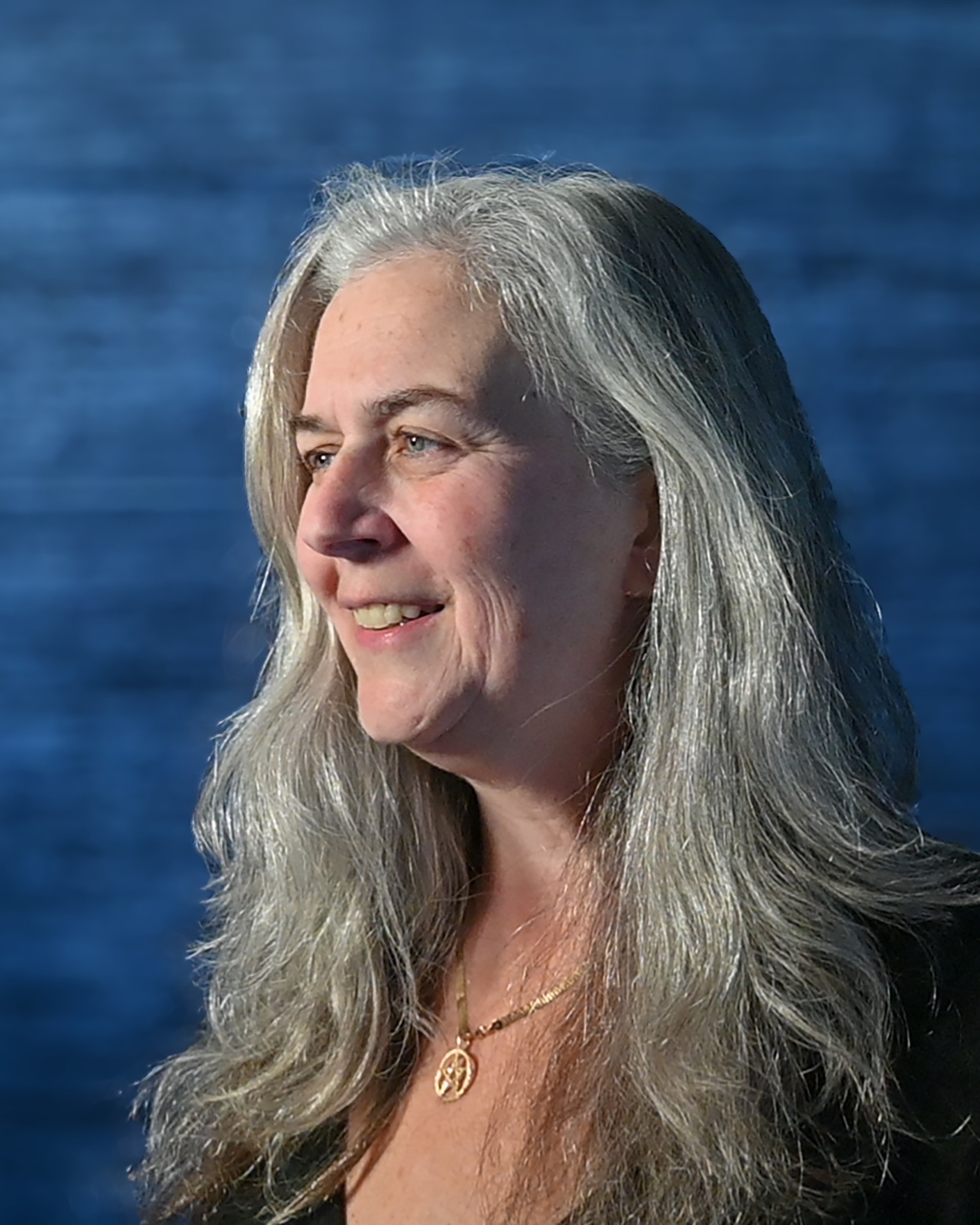
Portrait of Lissa Crosby, smiling warmly, with long silver hair, photographed against a deep blue background.